
We create experiences that stay with people—work that shifts perspective, lingers, and opens up new ways of seeing.
Our work spans commissions, talks & workshops, and strategic consultancy to help organisations integrate storytelling as a core part of how they think, communicate, and create.
We empower people to use immersive tools, demystifying the medium through hands-on learning and real-world application. We work across:
From global XR platforms reaching millions to hands-on workshops with 13-year-olds, we use storytelling and interaction to engage audiences, communicate complex ideas, and embed storytelling into your institutional strategy.
We have collaborated with cultural institutions, brands and partners worldwide including the BBC, Google Creative Lab, and leading museums.

We worked with Tate’s Digital Experience team to develop a Digital Experiences Playbook—an internal strategic document designed to support how immersive and digital formats are understood, commissioned and integrated across the organisation.
Building on earlier consultation work, the project responded to a clear internal need: to demystify the rapidly evolving landscape of immersive technologies and provide a shared framework for decision-making across curatorial, technical and operational teams. The Playbook was conceived as a practical tool—supporting internal advocacy, aligning departments, and enabling more confident conversations around digital engagement.
Through a collaborative process of workshops, research and review, we mapped a broad spectrum of formats—from projection-based installations and multi-channel film to VR, AR and location-based experiences—outlining their creative potential alongside key considerations such as production timelines, audience capacity and technical requirements. By combining best-practice examples from both cultural and commercial contexts with clear, accessible language, the document translates complex systems into actionable insight.
The result is a 30 page living document, designed to evolve alongside the organisation. It provides Tate teams with a shared vocabulary, a menu of strategic options, and a framework for evaluating how immersive storytelling can enhance exhibitions and audience engagement.
Beyond the document itself, the process supported knowledge transfer within the organisation by equipping teams with the confidence to explore, commission and advocate for digital experiences as part of Tate’s wider programme.
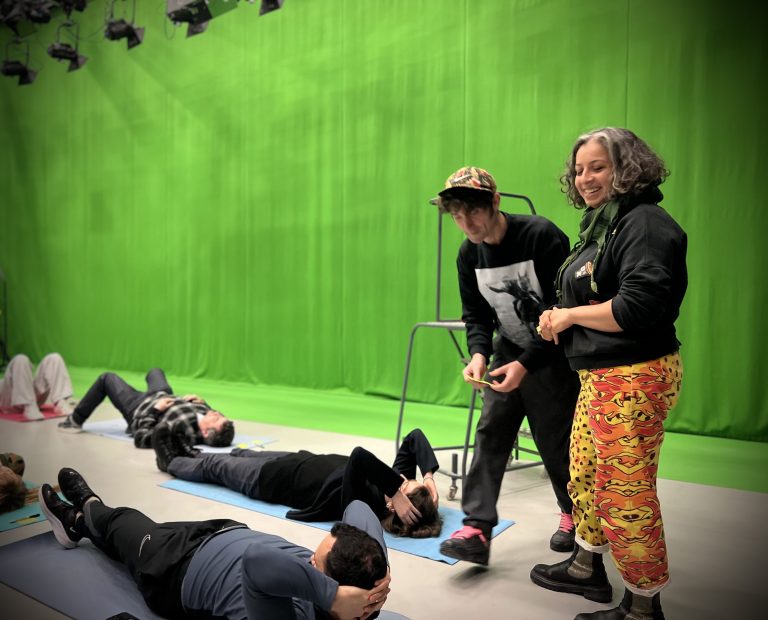
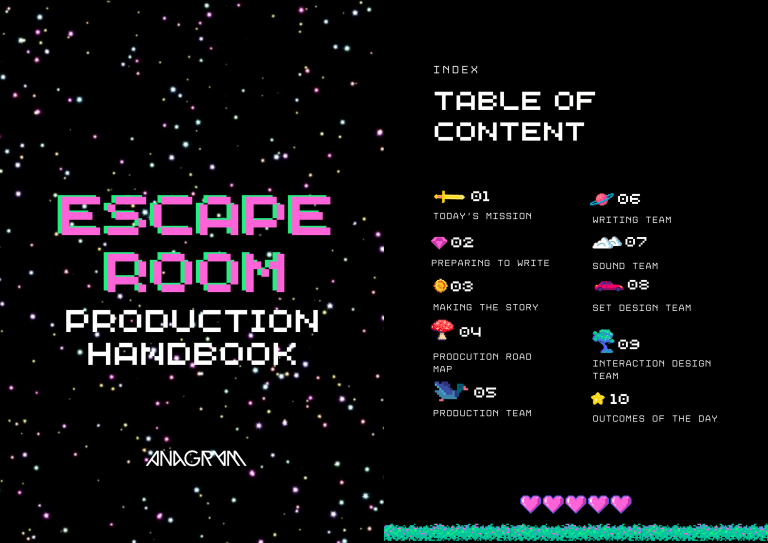
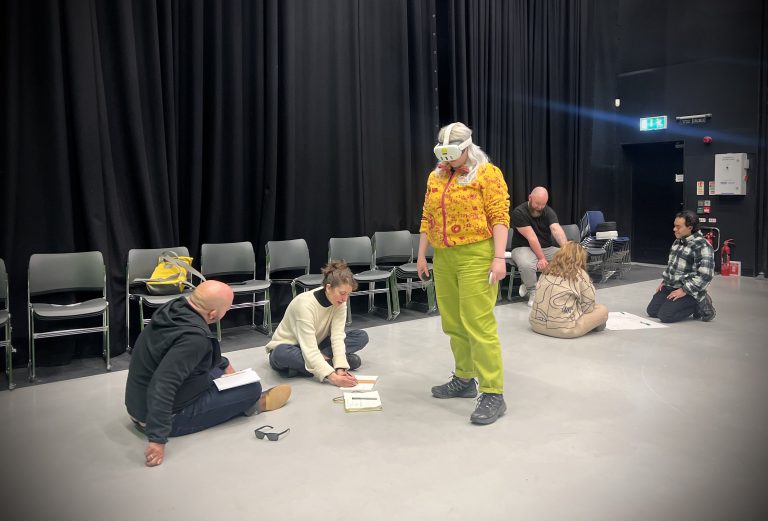
We designed and delivered a hands-on VR workshop where young people conceptualised, built and tested their own escape room experiences in a single day.
Delivered as part of the National Science and Media Museum’s Bradford Digital Creatives programme, the session worked with 12 students aged 11–13, many with little to no prior exposure to immersive tools. The programme brought professional artists and creative technologists into schools across Bradford, supporting young people to use digital tools to tell their own stories. Within this context, the workshop blended storytelling with game design to create an environment where ideas could quickly take shape through making, discussion and experimentation.
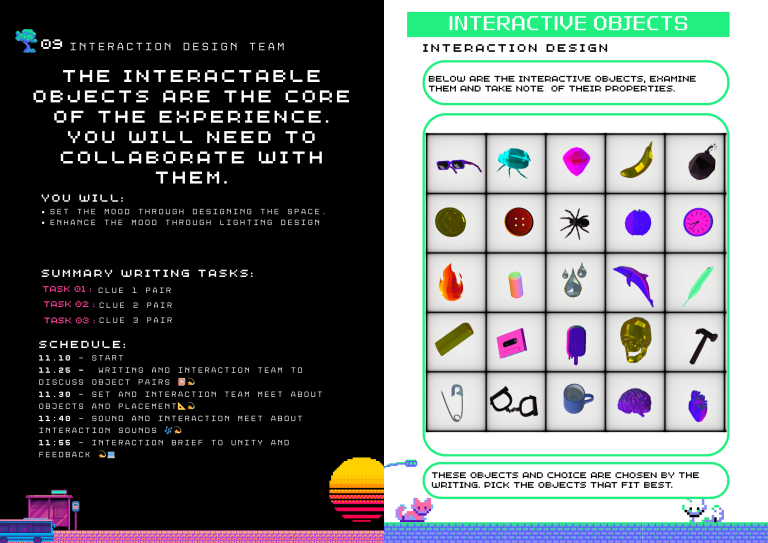
At the core of the workshop was a simple but evocative narrative prompt: a room with no windows, two locked doors, and a mysterious creature trying to break in. To escape, participants had to piece together a story through objects in the space, uncover clues, and solve a puzzle before time ran out. This framing gave structure to the day while encouraging imagination, tension and play.
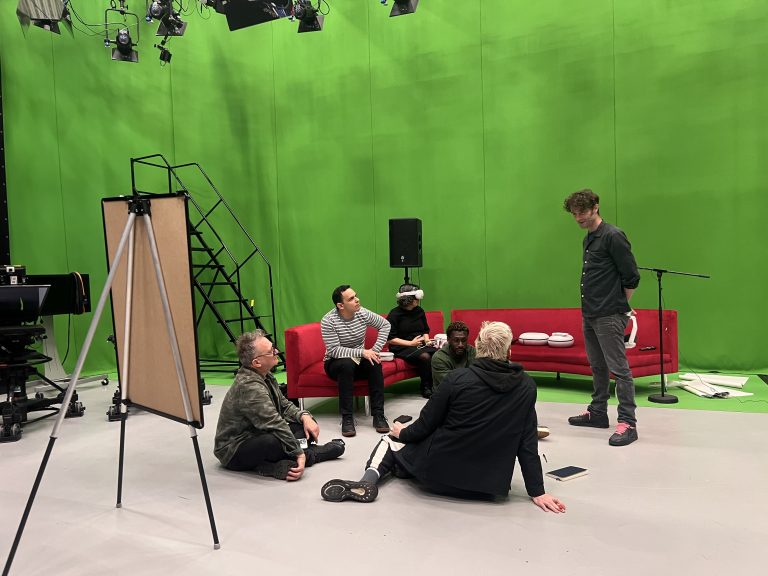
We began by unpacking how immersive experiences are made—introducing key roles, tools and workflows from the industry. Participants were guided through the full creative process, from early ideas and storyboarding through to building and testing interactive scenes using Unity-based tools. What might initially feel complex became something they could approach directly and collaboratively.
Working in two teams, students developed their own interpretations of the brief, shaping narrative, environment and interaction through a limited set of objects. They moved between sketching, scripting and prototyping, gradually bringing their ideas into VR and testing how the experience felt from a player’s perspective.
By the end of the day, each team had created a short interactive scene, combining story, spatial design and gameplay. The workshop concluded with presentations and reflection, giving participants the opportunity to share their work and articulate their creative decisions.
The same framework has since been adapted for adult learners, supporting teams to better understand how storytelling and interaction can shape experiences across different contexts.
You can find the Bradford Digital Creatives impact study here.

In 2017, we worked with an internal team at Volkswagen Group on a private stakeholder experience connected to the company’s future mobility strategy. At a moment when the organisation was exploring autonomous, intelligent transport, the team needed to communicate a cultural shift internally: from traditional automotive identity towards mobility as intelligence, autonomy and experience.
Rather than creating a conventional presentation, we designed a bespoke immersive journey for a closed, high-level event. Through sound, environment and carefully paced storytelling, the experience helped senior stakeholders engage with the idea directly.
The work transformed a complex strategic proposal into something tangible and felt, supporting internal alignment and helping the team build momentum around a new model of transport.
“Working with Anagram was a truly inspiring experience. Their creative input is innovative, delivered quickly and with high professionalism. Their energy and motivation is easily transferred to the project and the people working with them.
“The workshop was well structured, with a thoughtful takeaway resource that supported students on the day and helped embed the learning. It was wonderful to see students so energised by the process, confidently sharing ideas, experimenting with storytelling and becoming fully immersed in the project. May and the team brought a relaxed, encouraging and generous presence to the room, helping every student feel capable and excited to contribute.
I would highly recommend May and the Anagram team for future creative and educational collaborations. A professional organisation inspiring students to think boldly and believe in their creative potential.”
“ANAGRAM is a wonderful concoction of storytelling and immersive entertainment design. Working with them is a truly collaborative and creative process – their involvement on a commercial project opened my eyes to the power of their craft, and the possibility it holds for new technologies.”
